Construction leaders: What's in store for 2026


What are the big takeaways from 2025 and predictions for 2026? We asked contractors, academics and analysts to reflect on this year and share their expectations for what’s ahead. Not surprisingly, labor issues—from headcount to safety—dominated the conversation. Less disruption, more tech adoption and better policy development topped the wish list for the coming year. —Margot Lester
What’s one big lesson the industry learned in 2025 and how can we apply it to perform well next year?
Barajas: The biggest lesson from 2025 was simple: we can’t build our way out of a housing and infrastructure shortage without fixing the workforce problem first. No level of funding or demand matters if we don’t have the human infrastructure to execute the work. In 2026, we need a more honest approach—one that embraces immigration reforms to expand the legal labor supply, streamlines development approvals and invests in the contractors already carrying the load. Without those pieces, the gap between need and capacity will only widen.
Bell: Protecting your labor force is more important than ever. Annual construction wage growth has held above 4% since COVID, and with increased immigration enforcement this year, reducing the available workforce, employment costs could climb even higher as employers compete for a shrinking pool of workers. This means it is imperative for firms to develop and retain their workforce through training programs, a strong work culture and competitive compensation. By investing in retention now, firms can potentially avoid the future costs associated with constant recruitment and training, especially as competition for workers intensifies.
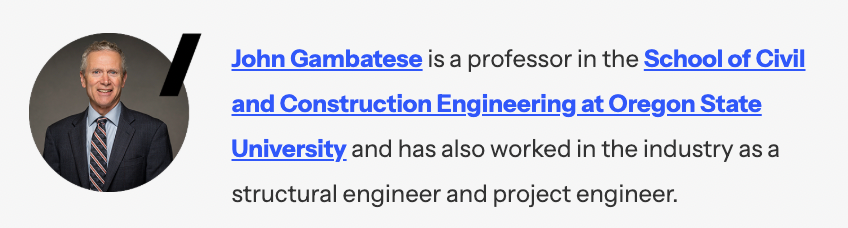
Gambatese: Construction projects get built by workers in the field. While new technologies like AI, remote sensing and automation support performing the work, they presently are not able to perform all of the functions provided by field workers. The construction industry remains dependent on its workforce. Availability of a skilled workforce—and ensuring their safety, health and welfare—is critical for sustained competitiveness and success in the industry. Moving into 2026, construction organizations need to strategically plan how new technologies can be integrated into work processes and how worker skills can be enhanced to optimize the value of human-technology integration.
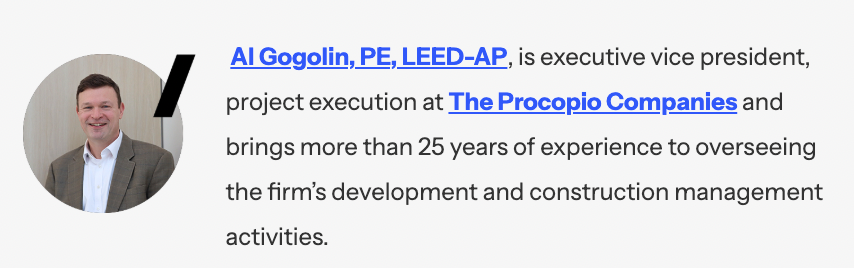
Gogolin: What 2025 really exposed was how fragile “perfect plans” can be. Jobs that assumed everything would run smoothly were the first to unravel, while those that accepted disruption as part of the process stayed on track. Going into 2026, the smartest operators will aim for readiness. That means planning with the expectation that something will change and having the confidence to adjust without panic or blame.
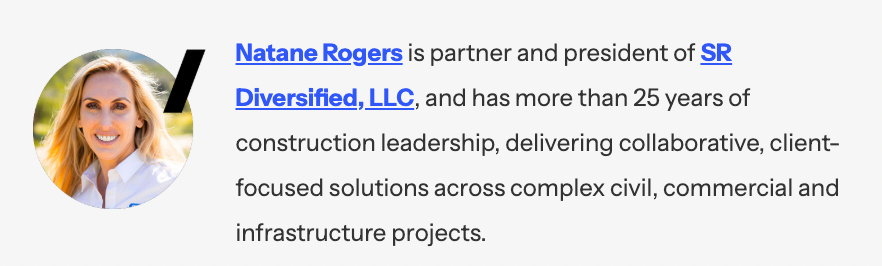
Rogers: It is incredibly important that clients’ and subcontractors’ cultures and values match [your] own. We know this, but sometimes we all need reminders, and we got ours in 2025. This year we reinforced alignment with most partners, clients and subcontractors while seeing that—despite our best efforts—when culture and values don’t align, a successful project in everyone’s eyes is almost impossible. When culture and values do align, results are incredible!
What construction trend do you hope continues or ends?
Barajas: A trend that should continue is the growing recognition that Hispanic workers and contractors are central to the U.S. construction economy. That acknowledgment must translate into better policy and targeted investment in the Hispanic construction cohort. Alongside that, we’re seeing Hispanic contractors, workers and trade associations build scalable, more sophisticated enterprises—an encouraging sign for the industry’s future. What should end in 2026 is the outdated perception that Hispanic contractors belong only in subcontractor roles rather than at the general-contractor level. Set-asides can help firms break into the industry, but at some point, proven performance should open the door to broader opportunities and sustainable growth.
Bell: After several weak years constrained by elevated mortgage rates and home prices that have climbed nearly 52% since 2020, the single-family construction market is finally showing signs of growth. A modest decline in rates combined with stabilizing home prices should improve housing affordability and allow the market to clear. These improving conditions support ConstructConnect's projection of 11.4% year-over-year growth in single-family starts for 2026. Residential growth will be important for the construction industry overall, particularly as nonresidential activity faces a more challenging outlook.
Gambatese: Total Worker Health has continued to grow as an important aspect of organizational success. It recognizes that workplace safety, worker well-being and mental health are fundamental qualities required in an organization. Importantly, its focus extends throughout an organization from the craft worker in the field to executive leadership personnel. Industry leaders have made great strides in sounding the alarm regarding mental health issues in construction and developing resources to support organizations as they care for their employees. Continued focus and development on this issue are needed.
Gogolin: One trend I'd like to keep is more honest conversations at the start of projects. In 2025, when teams were upfront about costs, constraints and capability early on, projects tended to feel calmer and more controlled. It cut down the posturing and late-stage surprises. That openness builds trust, and once it’s there, I find everything else tends to work better. Models like early contractor involvement and alliance-style contracts gained ground precisely because they reward transparency over optimism.
Rogers: SRD has seen clients that traditionally bid projects hard-bid lump sum move toward design-build, progressive design-build or alternative delivery methods. These methods promote a more collaborative environment, focusing on the success of the project. We have also seen these clients engage in partnering sessions, allowing open conversations, and early identification of issues and risks—all creating communication and avenues to solve and mitigate issues early. These sessions also provide an environment to recognize successes and reward efforts above and beyond expectations. We hope this trend continues.
What trend or development do you expect to emerge in 2026 and how will it impact the industry?
Barajas: In 2026, workforce and immigration policy will finally collide in a meaningful way. Policymakers are beginning to understand that every national priority—housing, infrastructure, energy, resilience, affordability—depends on labor capacity, and the current system simply can’t meet that demand.
We’ll see deeper conversations about construction-specific visa programs, expanded training pipelines, and partnerships that elevate minority contractors. These shifts can stabilize project timelines, improve affordability, and create real opportunities for firms across the industry. If we get this right, 2026 could be the year we stop reacting to the labor crisis and start solving it. If we don’t “build the bench,” the leadership gap will widen dramatically over the next decade as experience exits the field.
Bell: We expect growth for power infrastructure in 2026, driven by significant demand for data center construction. ConstructConnect reported total year-to-date data center construction starts exceeded $40 billion through October 2025. These facilities require massive amounts of electricity to power them, creating substantial demand for new power generation, transmission, and substation construction. As data centers multiply across the country, the power infrastructure needed to support them presents a significant growth opportunity for contractors specializing in electric, utility and infrastructure work.
Gambatese: Technology advances have greatly expanded our ability to collect and mine project and site data, communicate amongst team members, monitor work progress, and assist with decision making. The technology enables making connections. Connections between project partners, infrastructure, equipment, workers, and more. The connections allow for communication and collaboration. As a result, industry leaders will view themselves as integral parts of an "ecosystem" comprised of many organizations and entities that all depend on each other. They will realize that sustained success requires devoted connection and support throughout the system.
Gogolin: In 2026, I expect decision-making to shift earlier and become more disciplined. There’s growing fatigue with fire-fighting and constant course correction. More time will be spent pressure-testing plans before work begins, rather than fixing problems on site. The impact should be fewer rushed compromises and a stronger sense that projects are being led, not chased.
Rogers: Modular and prefabricated construction is becoming increasingly popular. This type of construction leads to more reliable results, better quality control, reduced schedules and reduced cost. I expect this to continue impacting the cost and schedules mostly for large projects with repeatable spaces.
What should construction leaders think about or do differently in 2026?
Barajas: Construction leaders need to explore new methodologies and practices that broaden development and financing options. The national allocation of more than $10 billion in annual Low-Income Housing Tax Credits has a limited impact because much of its value is eroded by layers of requirements unrelated to building quality housing. We can’t treat housing subsidies as a catch-all tool to fix unrelated disparities in the development ecosystem or society at large. Along with relaxing some funding requirements, the industry should also consider where exemptions—not additional regulations—make more sense. If we expect these programs to deliver meaningful housing outcomes, we need to let them focus on the core mission: building good, affordable housing at scale.
Bell: Be strategic about where you compete and how you spend. With overall nonresidential starts expected to decline in 2026, growth requires deliberate targeting of the right construction markets. Firms should focus on high-growth sectors like data centers, civil infrastructure or residential in accessible geographies. At the same time, construction professionals must stay vigilant about operational costs. Cost surges have consistently caught firms off guard, eroding profit margins. This means firms need to manage their supply chain, bid projects strategically and control labor costs. Success in 2026 will come from working smarter through informed market selection and cost discipline.
Gambatese: The industry is presently struggling with preventing serious injuries and fatalities. The rate of fatalities in the construction industry has remained relatively stagnant over the past couple of decades. While the industry continues to focus on workplace safety, achieving safety excellence will likely require a different approach. New views of safety and safety management are emerging. One that has merit is viewing safety as the preservation and promotion of positive values, rather than only the absence of risk or lack of injuries/fatalities. Recent research has identified values such as integrity, presence, order and empathy, among others, as positively influencing safety. For safety excellence, organizations should consider encouraging these values and monitoring the traits that are indicators of the values.
Gogolin: If there’s one thing leaders should do differently in 2026, it’s how they deal with pressure. Too often, it gets pushed down the chain instead of being talked through. Leaders who take time to be clear about priorities, honest about constraints and open to early conversations when something isn’t working will see fewer problems escalate and better outcomes overall.
Rogers: Support and develop your teams. Treat them like family with an emphasis on providing a path for their success. If you do that, they will pay it back in spades. Only grow as fast as you can cultivate your team with the right people in the right seats.
Thanks for reading today's edition! You can reach the newsletter team at thelevel@mynewsletter.co. We enjoy hearing from you.
Interested in advertising? Email us at newslettersales@mvfglobal.com
Was this email forwarded to you? Sign up here to get this newsletter once a week.
The Level is curated and written by Margot Lester and edited by Bianca Prieto.